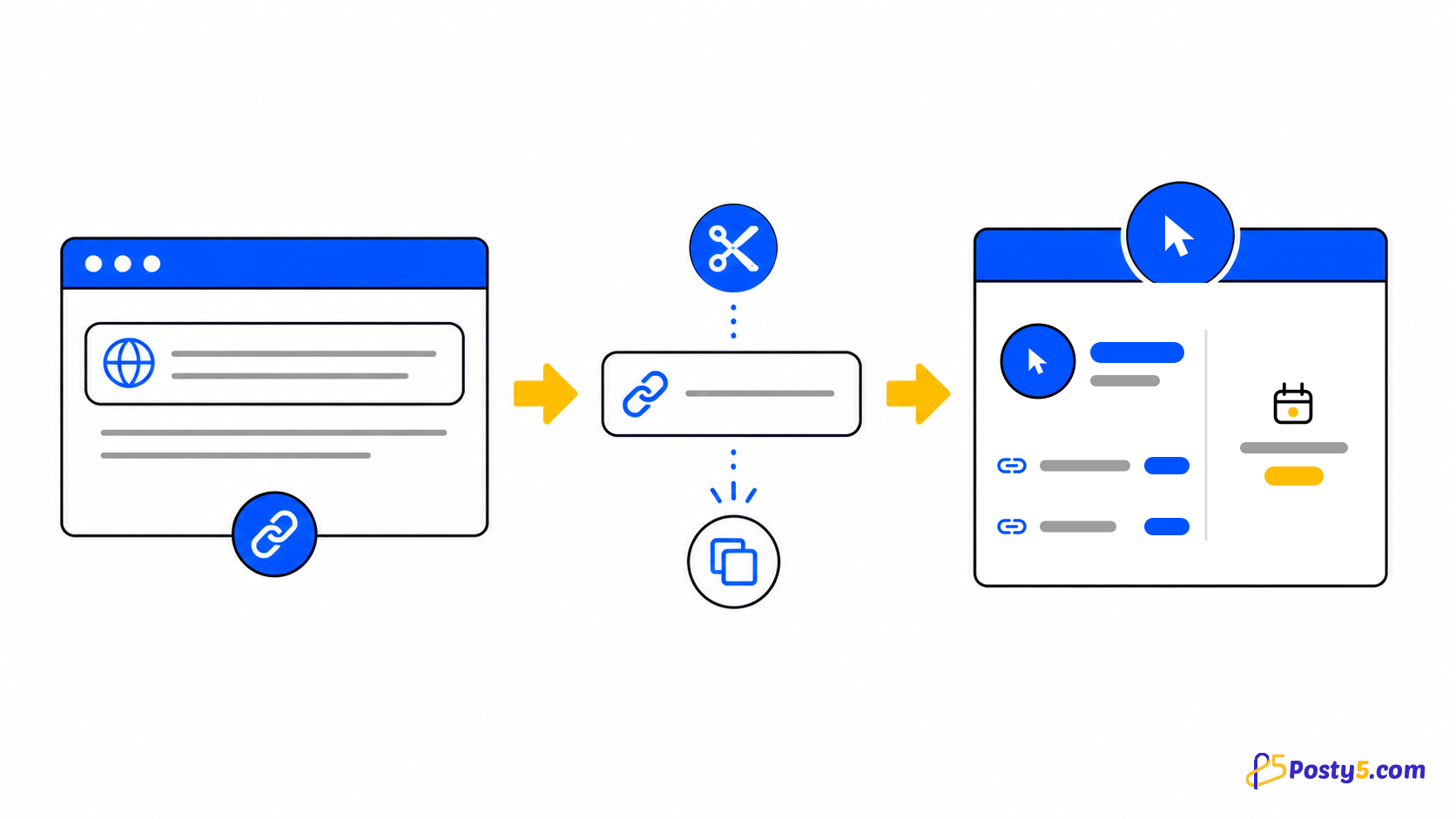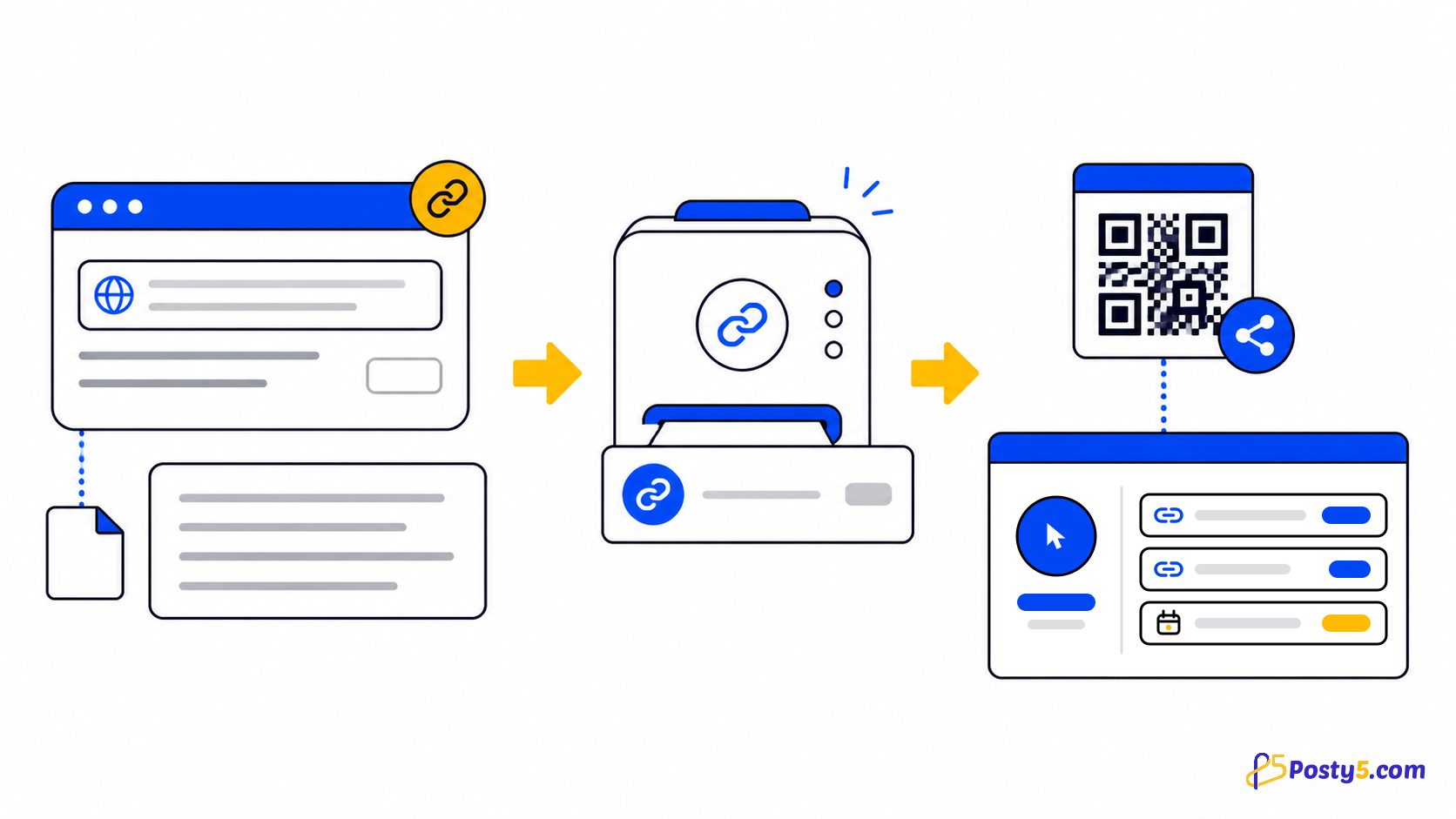
Posty5 turns a valid destination URL into a short address whose code is resolved through the public short-link route. Test the destination first and shorten only links you are allowed to share.
Every action described here is priced in credits: How Posty5 Credits Work: One Budget, Every Tool.
How Posty5 short links work
Posty5 turns a valid destination URL into a short address whose code is resolved through the public short-link route. Test the destination first and shorten only links you are allowed to share.
The public page lets a guest create one link in the current browser session. After that it asks the visitor to sign in; a signed-in account can keep links in its dashboard.
Create a short link
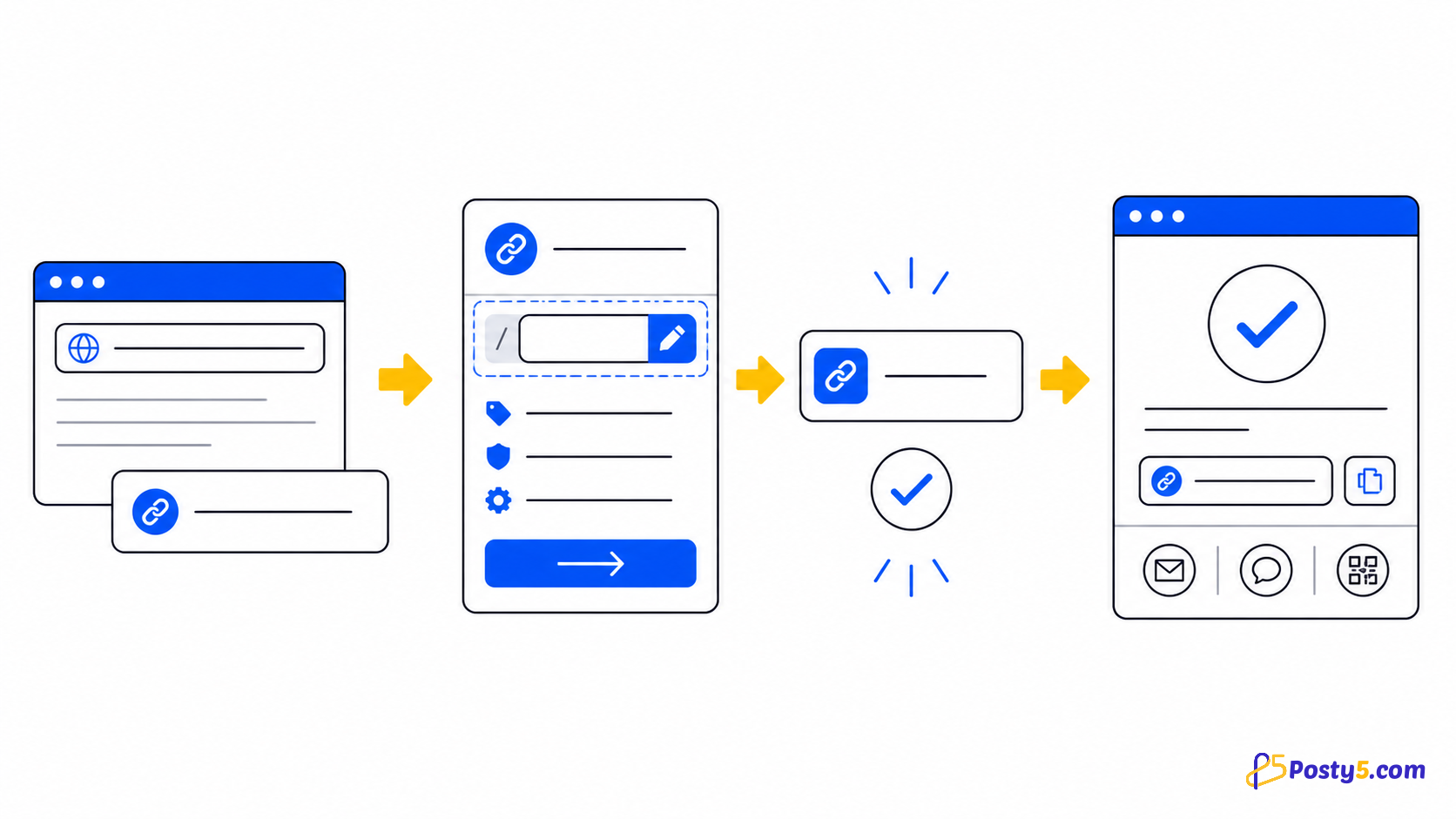
- Paste the full destination including https://, optionally add a name or an available custom ending when signed in, complete the verification, then create, copy and test the result.
- A custom ending is chosen only when a link is created, must be available across Posty5 and may be locked by account entitlement. Leave it empty for an automatically generated code; the destination can still be edited later.
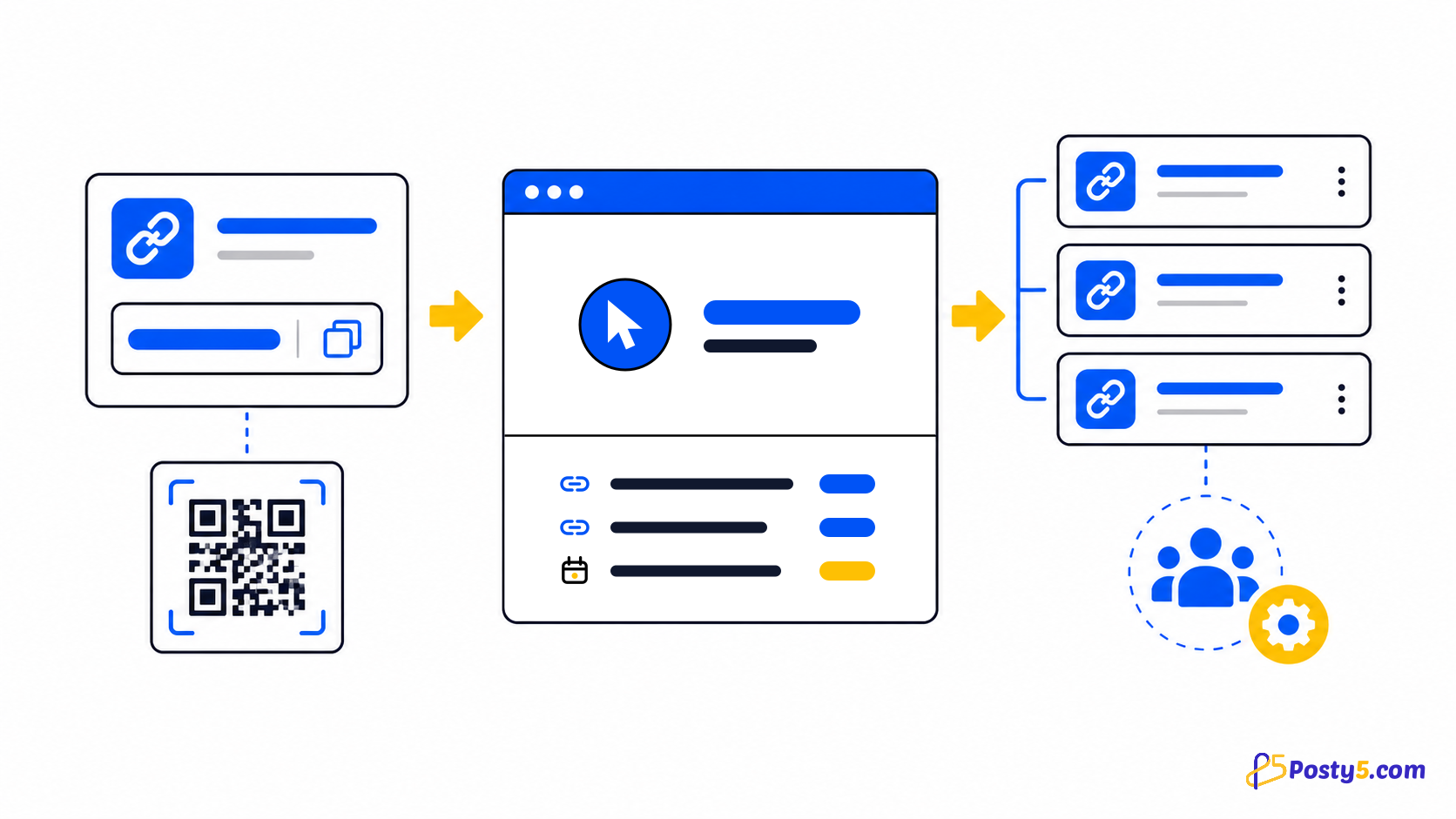
- Every short-link response includes a QR landing URL and a QR image URL. The public tool and dashboard also connect the link to the QR template workflow.
Organise campaign links
Signed-in users can list links, search them, open details, edit the destination and name, or delete a link. Changing the destination keeps the same short address.
The API accepts tag and refId fields and can filter by exact values. They are automation-oriented fields, not controls in the standard public creation form.
Measure visits accurately
Posty5 stores the total visitor count and the last-visit date for each short link. The statistics endpoint also reports totals and top links for a selected period.
Posty5 does not store a per-click event history for location, device or referrer reporting. Do not read the aggregate counter as unique visitors or detailed attribution.
Compare the workflows
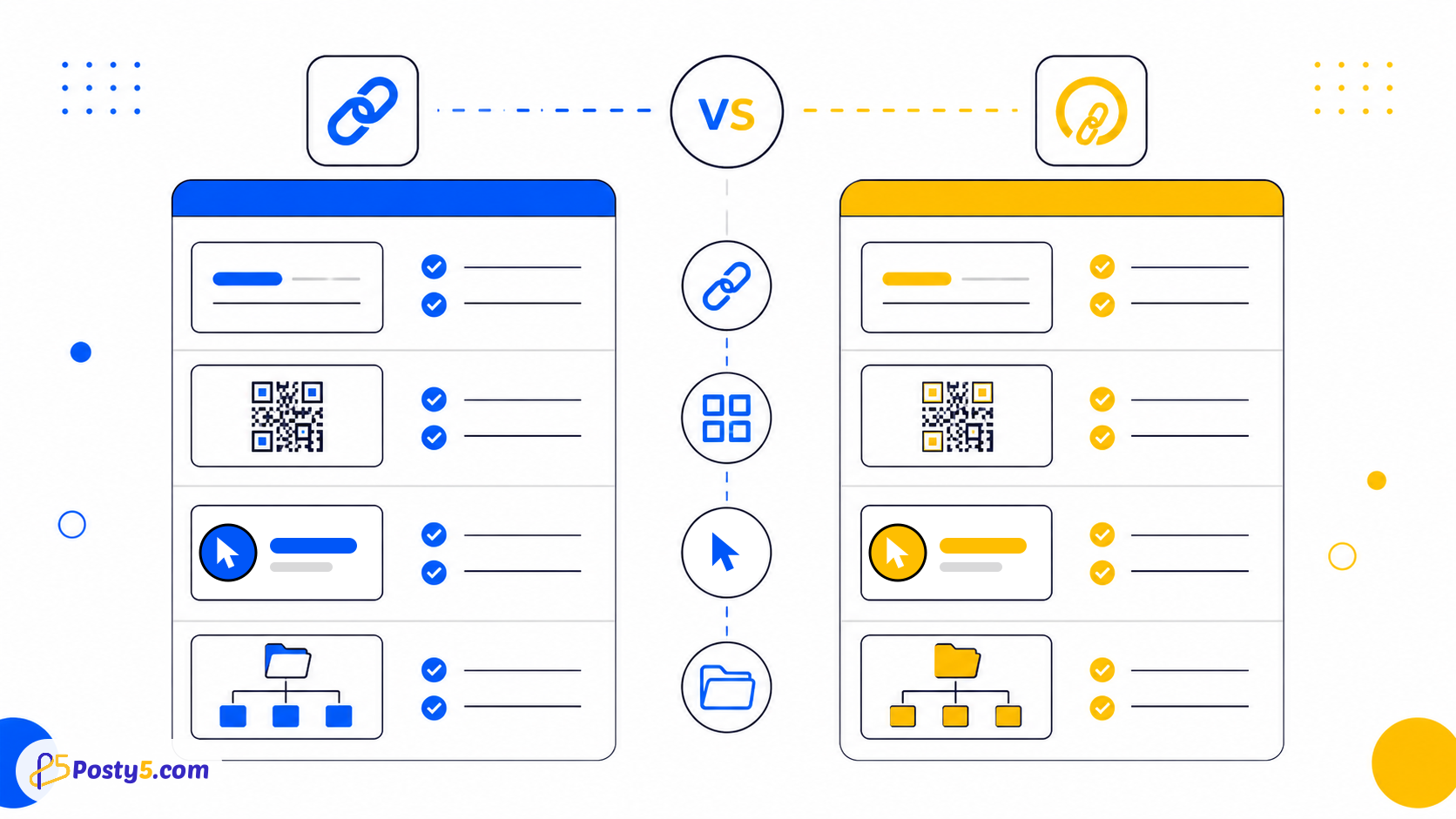
If the destination publishes al:android:url or al:ios:url metadata, Posty5 can select that deep link for the matching device. Without those tags it uses the normal destination.
Posty5 has no verified per-user custom short domain, link expiry, password protection, A/B rotation or bulk import of links. Choose another workflow if one of those is essential.
Frequently asked questions
How Posty5 short links work?
Posty5 turns a valid destination URL into a short address whose code is resolved through the public short-link route. Test the destination first and shorten only links you are allowed to share.
Create a short link?
Paste the full destination including https://, optionally add a name or an available custom ending when signed in, complete the verification, then create, copy and test the result.
Organise campaign links?
The API accepts tag and refId fields and can filter by exact values. They are automation-oriented fields, not controls in the standard public creation form.
Measure visits accurately?
Posty5 stores the total visitor count and the last-visit date for each short link. The statistics endpoint also reports totals and top links for a selected period.
Continue through the URL Shortener guides
- Read: How to Shorten a URL in 3 Steps
- Read: How to Create a Custom Short Link with Posty5
- Read: How to Organise Campaign Short Links with Tags and Ref IDs
- Read: A Bitly Alternative for Simple Short Links and QR Codes
- Read: A TinyURL Alternative with Link Management and QR Codes
- Read: Posty5 vs Bitly: Choose the Link Workflow You Need
- Read: Short Link Not Working? Causes and Fixes